
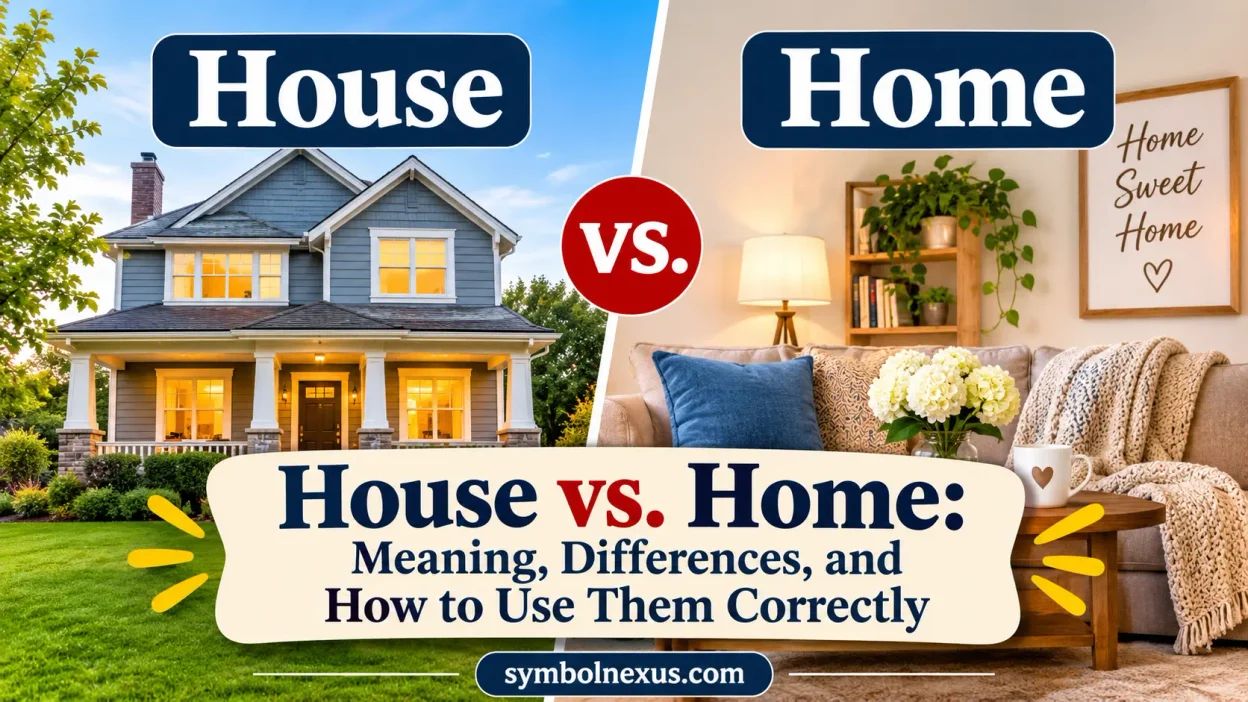
The words house and home are often used interchangeably because both relate to the place where people live. However, they have different meanings and are not always interchangeable.
A house is a physical building designed for people to live in. A home is the place where someone lives and feels a sense of comfort, belonging, and emotional connection. A home can be a house, apartment, or any other place where someone feels they belong.
For example, you might buy a beautiful house, but it becomes your home when you fill it with personal memories, relationships, and experiences.
Understanding the difference between house and home will help you use these words correctly in everyday conversations, writing, and professional communication.
Quick Answer: What Is the Difference Between House and Home?
The main difference between house and home is that house refers to a physical building, while home refers to a place of living, comfort, and belonging.
- House: A physical structure or building where people live.
- Home: A place where someone lives and feels comfortable, safe, or connected.
Examples:
- They bought a beautiful house last year.
- I am going home after work.
- Her house has three bedrooms.
- There is no place like home.
In simple terms, a house is a building, but a home is where you belong.
1. What Does “House” Mean?
The word house is a noun that refers to a physical building designed or used as a place for people to live. It usually includes rooms, walls, a roof, windows, and doors.
A house can be large or small, modern or traditional, expensive or affordable. The word focuses mainly on the building itself rather than the emotions or experiences associated with living there.
Examples:
- My parents live in a large house.
- They bought a new house near the park.
- Her house has four bedrooms and two bathrooms.
- The house needs a new roof.
- We painted our house last summer.
In these sentences, house describes a physical structure or property.
Common Uses of House
1. Talking about a physical building
- Their house is made of brick.
- The house has a beautiful garden.
- We live in a two-story house.
2. Discussing property or real estate
- They want to buy a house.
- The house is available for sale.
- He sold his old house last month.
3. Describing the size or design of a building
- This house has a modern design.
- Their house is very spacious.
- We visited a beautiful country house.
4. Talking about household features
- The house has a large kitchen.
- There is a garage behind the house.
- Our house has central heating.
2. What Does “Home” Mean?
The word home refers to the place where someone lives, feels comfortable, and experiences a sense of belonging. Unlike house, it is not limited to a particular type of building.
A home can be a house, apartment, flat, dormitory, mobile home, or even a temporary place where someone feels settled and connected.
The word often carries emotional meaning because it is associated with family, memories, security, love, and personal identity.
Examples:
- I love spending time at home.
- She returned home after a long journey.
- My home is my favorite place.
- They made their new apartment feel like home.
- There is no place like home.
In these examples, home emphasizes the place where someone lives or feels a sense of belonging.
Common Uses of Home
1. Talking about where you live
- I am going home.
- She works from home.
- We stayed at home yesterday.
2. Expressing comfort and belonging
- Home is where the heart is.
- This place feels like home.
- I always feel comfortable at home.
3. Referring to family life
- My home is full of happy memories.
- They created a peaceful home for their children.
- A loving home can help children feel secure.
4. Describing a place of origin or belonging
- Pakistan is my home country.
- She returned to her hometown.
- He considers London his second home.
3. House vs. Home: Key Differences
Although both words relate to living spaces, they emphasize different things.
| Feature | House | Home |
|---|---|---|
| Basic meaning | Physical building | Place of living and belonging |
| Main focus | Structure and property | Comfort and emotional connection |
| Part of speech | Noun | Noun and adverb in certain expressions |
| Countable? | Yes | Usually uncountable in its general living-place sense |
| Emotional meaning | Usually neutral | Often emotional |
| Example | They bought a house. | They made it their home. |
| Can be temporary? | Usually refers to a building | Yes, a temporary place can feel like home. |
Remember: A house is a type of building, while a home is a place where someone lives or feels they belong.
4. When Should You Use “House”?
Use house when you are talking about a physical residential building, its structure, features, ownership, or condition.
A. When Describing a Building
Use house when discussing the physical appearance or construction of a property.
- Their house is painted white.
- The house has a red roof.
- We live in a beautiful wooden house.
B. When Talking About Buying or Selling Property
Use house when referring to residential real estate.
- They are planning to buy a house.
- She sold her house last year.
- The house is worth $300,000.
C. When Discussing Rooms and Features
- My house has three bedrooms.
- There is a swimming pool behind the house.
- The house needs some repairs.
D. When Comparing Buildings
- This house is bigger than our previous one.
- Their house is older than ours.
- We visited a modern house near the beach.
5. When Should You Use “Home”?
Use home when talking about where someone lives, their personal space, or a place associated with comfort and belonging.
A. When Talking About Returning to Your Living Place
- I am going home.
- She went home early.
- They arrived home safely.
B. When Expressing Emotional Connection
- My home means everything to me.
- This small apartment feels like home.
- I miss being at home with my family.
C. When Talking About Daily Life
- I work from home.
- We usually eat dinner at home.
- He spends most of his time at home.
D. When Describing a Sense of Belonging
- After years of traveling, she finally found a home.
- This city feels like home to me.
- My grandparents’ house will always be home to me.
6. Is “House” Countable and “Home” Uncountable?
Both house and home can be countable nouns, but they are commonly used in slightly different ways.
House Is a Countable Noun
You can use numbers, articles, and plural forms with house.
Examples:
- I live in a house.
- They own two houses.
- There are five houses on this street.
- We visited several houses yesterday.
Home Can Be Countable or Uncountable
When home refers to someone’s living place or sense of belonging, it is often used without an article.
Examples:
- I am going home.
- She is at home.
- There is no place like home.
However, home can also be countable when referring to a particular residence, household, or type of living place.
Examples:
- They bought a new home.
- The charity provides homes for homeless families.
- We visited several retirement homes.
Therefore, it is not correct to say that home is always uncountable. Its countability depends on the meaning and context.
7. House vs. Home in Everyday Sentences
The following examples show how both words work in similar situations.
| Situation | House | Home |
|---|---|---|
| Buying property | We bought a new house. | We bought a new home. |
| Physical appearance | The house has a blue roof. | The home feels warm and welcoming. |
| Returning | She entered the house. | She went home. |
| Family life | Their house has five rooms. | Their home is full of love. |
| Personal connection | The house is very old. | This place feels like home. |
| Living arrangements | They rented a house. | They found a comfortable home. |
Notice that sometimes both words are correct, but they communicate different ideas.
For example:
- They bought a house. Focuses on the physical property.
- They bought a home. Emphasizes the place where they will live and build their lives.
8. Common Expressions with House
The word house appears in several common English expressions.
| Expression | Meaning | Example |
|---|---|---|
| House party | A party held at someone’s house | We attended a house party. |
| House owner | Someone who owns a house | The house owner lives nearby. |
| House rules | Rules followed in a household | Every family has house rules. |
| House guest | Someone staying at another person’s house | We have a house guest this weekend. |
| Housework | Household tasks | I need to finish my housework. |
| Housewarming | A celebration for someone moving into a new home | They invited us to their housewarming party. |
| House arrest | Legal confinement to one’s residence | He was placed under house arrest. |
| House keys | Keys used to open a house | I cannot find my house keys. |
9. Common Expressions with Home
The word home is also used in many familiar English expressions.
| Expression | Meaning | Example |
|---|---|---|
| At home | In one’s living place | She is at home today. |
| Go home | Return to one’s living place | I want to go home. |
| Feel at home | Feel comfortable and welcome | Make yourself feel at home. |
| Home sweet home | An expression of happiness about returning home | Home sweet home! |
| Home town | The town where someone grew up or comes from | I visited my hometown. |
| Home country | The country someone considers their own | She returned to her home country. |
| Home-cooked meal | Food prepared at home | I enjoy home-cooked meals. |
| Home alone | Being at home without other people | The children stayed home alone. |
| Bring something home | Make something clear or personally meaningful | The experience brought the message home. |
| Make yourself at home | Feel comfortable in someone else’s home | Please come in and make yourself at home. |
10. House vs. Home: Common Grammar Mistakes
English learners sometimes confuse these words because both refer to places where people live. Here are common mistakes and their corrections.
Mistake 1: Using “House” Instead of “Home” When Returning
Incorrect: I am going to house.
Correct: I am going home.
Why? Home is commonly used without a preposition after verbs such as go, come, and get when referring to returning to one’s living place.
Mistake 2: Adding an Article Before “Home” Incorrectly
Incorrect: She is going to the home.
More natural: She is going home.
Why? When home means someone’s usual living place, it normally does not need the after go to. However, “the home” is correct when referring to a specific institution or residence.
Mistake 3: Confusing “At House” and “At Home”
Incorrect: I am at house.
Correct: I am at home.
Why? The natural expression is at home. You can say “at the house” when referring to a particular building.
Mistake 4: Using “House” for Emotional Belonging
Less natural: This house feels comfortable to me.
More natural: This place feels like home.
Why? Home more clearly expresses comfort, familiarity, and emotional connection.
Mistake 5: Assuming Every Home Is a House
Incorrect idea: A person must live in a house to have a home.
Correct idea: A home can be an apartment, flat, dormitory, mobile home, or another place where someone lives and feels they belong.
11. House vs. Home vs. Apartment: What Is the Difference?
Another word related to house and home is apartment. These words describe different aspects of residential living.
| Word | Meaning | Example |
|---|---|---|
| House | A physical residential building | They live in a large house. |
| Home | A place where someone lives or belongs | Their apartment feels like home. |
| Apartment | A separate residential unit within a larger building | She rents an apartment downtown. |
House
A house is generally a standalone residential building, although the word can have broader uses.
Example: We bought a two-story house.
Home
A home is the place where someone lives and feels connected.
Example: Their small apartment is a wonderful home.
Apartment
An apartment is a residential unit within a larger building, usually sharing walls, entrances, or common facilities with other units.
Example: He lives in a modern apartment.
Easy way to remember:
- House = Building
- Home = Place of belonging
- Apartment = Residential unit
12. Can a House Be a Home?
Yes. A house can become a home when people live in it and develop personal connections, memories, and experiences there.
A newly constructed house may initially be just a physical building. However, when a family moves in, decorates the rooms, shares meals, celebrates special occasions, and creates memories, it can become a meaningful home.
For example:
- A newly purchased house may feel empty at first.
- Adding furniture and personal belongings makes it more familiar.
- Sharing experiences with loved ones creates emotional connections.
- Over time, the building becomes a place of comfort and belonging.
However, not every home has to be a traditional house. A rented apartment, a small room, or even a temporary living space can become someone’s home.
13. House vs. Home in Different Situations
The correct word depends on what you want to express.
In Real Estate
Use house when discussing the physical property, its design, or construction.
- The house has a large backyard.
- They are selling their house.
Use home when emphasizing the residential experience or personal value.
- They are looking for a new home.
- This property would make a wonderful home.
In Family Life
Use house when describing the building.
- Their house has six rooms.
Use home when describing the family environment.
- Their home is filled with happiness.
In Travel
Use house when referring to a specific building.
- We visited my uncle’s house.
Use home when describing the place you are returning to.
- I cannot wait to get home.
In Emotional Writing
Home is usually more appropriate when discussing love, memories, safety, and belonging.
- Home is where I feel safe.
- A loving home creates beautiful memories.
14. Simple Tips to Remember the Difference
If you find it difficult to choose between house and home, remember these simple tips:
- Use house when describing a physical residential building.
- Use home when talking about where someone lives or belongs.
- Use house when discussing property, rooms, walls, and construction.
- Use home when expressing comfort, family connections, and memories.
- Say “go home” rather than “go to home.”
- Remember that a house can become a home, but a home does not have to be a traditional house.
- Use “at home” when describing someone’s presence in their living place.
The easiest rule is that a house is a structure, while a home is a place of living and belonging.
15. Frequently Asked Questions (FAQs)
1. What is the main difference between house and home?
A house is a physical building where people live, while a home is a place where someone lives and feels comfortable or connected. A house describes a structure, whereas home often carries emotional meaning.
2. Is a house always a home?
No. A house is a building, but it does not automatically feel like home. It becomes a home when someone lives there and develops a sense of comfort, belonging, or personal connection.
3. Can an apartment be called a home?
Yes. An apartment can be someone’s home because home refers to a place where someone lives and feels they belong, not a specific type of building.
4. Is home a countable or uncountable noun?
Home can be both countable and uncountable, depending on its meaning. For example, “I am going home” uses it without an article, while “They bought a new home” uses it as a countable noun.
5. Is it correct to say “I am going to home”?
No. The natural expression is “I am going home.” The word home usually does not require the preposition to after verbs such as go and come when referring to returning to one’s living place.
6. Should I say “at home” or “at the house”?
Both expressions are correct, but they have different uses. “At home” means someone is in their living place, while “at the house” refers to a particular physical building.
7. Why do people say “home sweet home”?
“Home sweet home” is a familiar expression used to show happiness, comfort, and affection when returning to one’s home.
8. Can a workplace be called a home?
Sometimes. A workplace can feel like a second home when someone develops strong relationships, comfort, and a sense of belonging there. However, this is usually figurative rather than literal.
9. What is the difference between house, home, and apartment?
A house is a physical residential building, an apartment is a separate living unit within a larger building, and a home is any place where someone lives and feels they belong.
10. Which word should I use when talking about family?
Use home when emphasizing family relationships, comfort, and emotional connections. Use house when describing the physical building where the family lives.
Conclusion
The difference between house and home is simple once you understand their meanings. A house is a physical building designed for people to live in, while a home is the place where someone lives and experiences comfort, belonging, and emotional connection.
For example, you may purchase a beautiful house, but it becomes your home when you create memories, share experiences, and build a life there.
Remember this simple rule: A house is made of walls and a roof, but a home is made of memories, comfort, and belonging.