Quick Answer: Different From vs. Different Than
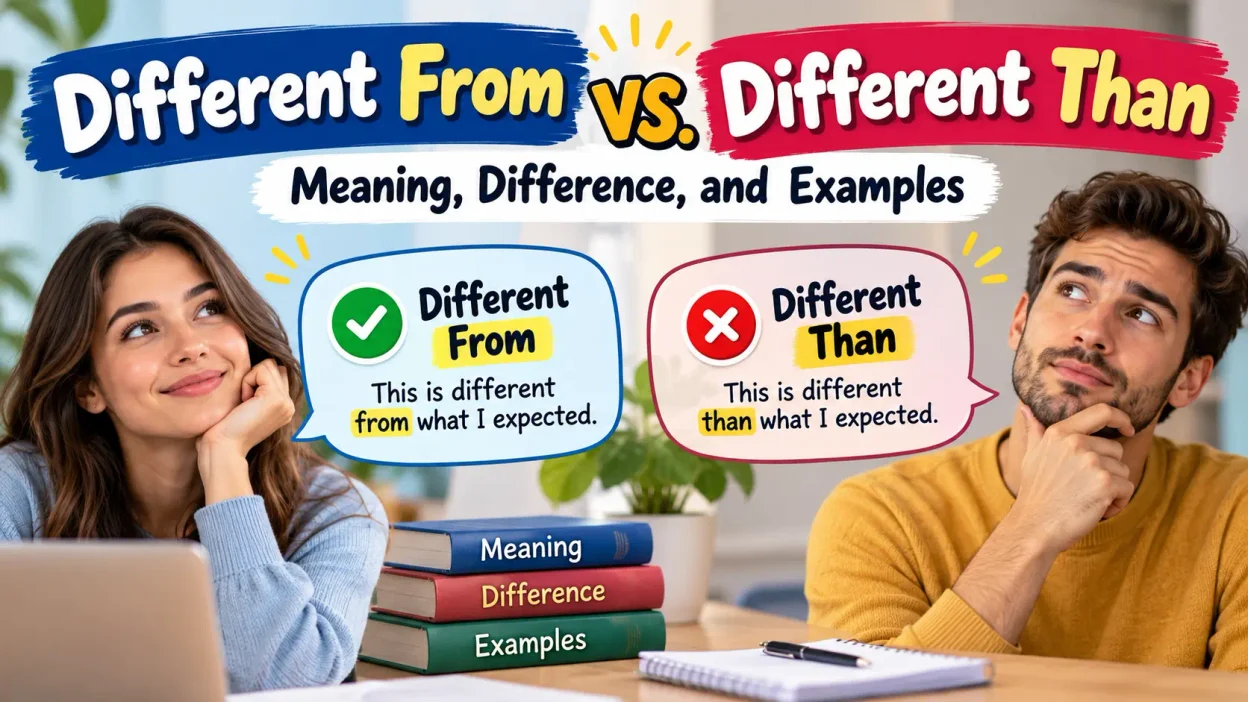
Both different from and different than are grammatically acceptable in modern English. However, their usage can vary depending on the sentence, writing style, and regional preference.
- Different from: The traditional and widely accepted choice in formal writing, especially in British English.
- Different than: Common in American English, particularly before a clause or when it makes a sentence easier to understand.
Examples:
- Different from: My new phone is different from my old one.
- Different than: The results were different than we expected.
In most formal writing, different from is a reliable default. However, different than is not automatically incorrect.
What Does Different From Mean?
The phrase different from means that two or more people, objects, ideas, or situations are not the same.
It is traditionally used when comparing nouns, pronouns, or noun phrases. The phrase clearly identifies the thing being compared with something else.
Examples of Different From in Sentences
- This book is different from the one I read last week.
- Her opinion is different from mine.
- Life in the countryside is different from life in a big city.
- The new design looks different from the original version.
- His approach to problem-solving is different from his colleague’s approach.
In each example, different from highlights a distinction between two things.
When Should You Use Different From?
Use different from when you want to:
- Compare two objects: The blue shirt is different from the black one.
- Discuss contrasting opinions: Her perspective is different from ours.
- Write formal or academic content: The findings are different from those reported in earlier studies.
- Describe changes: The revised document is different from the original.
- Follow traditional grammar guidance: Choose different from when your style guide recommends it.
Example: The final report was different from the initial proposal.
This sentence clearly shows that the report and the proposal were not the same.
What Does Different Than Mean?
The phrase different than also expresses a lack of similarity between two things. It is especially common in American English.
One frequent use occurs before a clause containing a subject and a verb. In these sentences, different than can sound natural and help avoid an awkward construction.
Examples of Different Than in Sentences
- The results were different than we expected.
- The movie was different than I thought it would be.
- Today’s weather is different than it was yesterday.
- The situation turned out differently than we had planned.
- The actual cost was different than the estimate suggested.
These examples demonstrate how different than can introduce a clause that explains the expectation, condition, or situation being compared.
When Should You Use Different Than?
Use different than when it sounds natural in your sentence and suits your audience or writing style.
It is particularly useful when:
- Introducing a clause: The outcome was different than we anticipated.
- Writing in American English: The expression is common in American usage.
- Avoiding awkward wording: The alternative with from may require restructuring the sentence.
- Writing conversational content: The phrase is familiar to many English speakers.
- Following an established style: Use it if your publication’s guidelines permit or prefer it.
Example: The meeting lasted longer than expected and was different than we had planned.
Here, different than introduces the clause describing the original plan.
Different From vs. Different Than: Key Differences
| Feature | Different From | Different Than |
|---|---|---|
| Meaning | Not the same as | Not the same as |
| Grammatical status | Correct | Correct in modern usage |
| Traditional grammar preference | Generally preferred | Sometimes discouraged by traditional style guides |
| American English | Common | Common |
| British English | Generally preferred | Less common in many contexts |
| Before a noun phrase | Very natural | Often less natural |
| Before a clause | Correct | Often natural and convenient |
| Formal writing | Reliable default | Acceptable when appropriate to context and style |
The most important point is that both expressions can be correct. The choice depends on sentence structure, regional usage, and the style you are following.
Different From vs. Different Than: Examples Compared
The following examples show how each phrase works in context.
| Different From | Different Than |
|---|---|
| This plan is different from the original plan. | The plan is different than we originally expected. |
| Her answer is different from mine. | Her answer was different than I thought it would be. |
| The new model is different from the previous model. | The new model performs differently than we anticipated. |
| His writing style is different from his teacher’s style. | The story turned out differently than we had imagined. |
| The results are different from those in the earlier study. | The results were different than researchers had predicted. |
Notice that different from is especially straightforward when the comparison involves a noun phrase. Different than often appears before a full clause.
Is Different From More Correct Than Different Than?
Different from has traditionally been recommended by many grammar guides and is a safe option for formal writing.
However, it would be inaccurate to say that different than is always wrong. The phrase has a long history in English and is widely used, especially in the United States.
For example:
- Natural: The outcome was different than we expected.
- Also correct: The outcome was different from what we expected.
Both sentences communicate a similar meaning. The second uses from before the noun phrase what we expected, while the first uses than before a clause.
Some editors may prefer different from for consistency, while others accept both forms. When writing for a particular publication, follow its style guide.
Different From vs. Different Than in American and British English
Regional preferences can influence which phrase sounds most natural.
American English
Both expressions are widely used in American English. Different than is especially common before clauses.
Examples:
- The test was different than I expected.
- Her approach is different from mine.
American writers can use either phrase, depending on the sentence.
British English
Different from is generally the more traditional and preferred form in British English.
Examples:
- The new policy is different from the previous one.
- The result was different from what we anticipated.
Although different than may also be understood, writers following conventional British style often choose different from.
International and Academic English
If you are writing for an international audience, different from is usually a dependable choice.
In academic writing, consistency and clarity are important. Check your institution’s or publisher’s guidelines if they specify which expression to use.
Different From vs. Different Than vs. Different To
English also has the expression different to, which is particularly common in British English.
All three expressions can communicate that something is not the same as something else, but their popularity varies by region.
| Phrase | Typical Usage | Example |
|---|---|---|
| Different from | Widely accepted across English varieties | This version is different from the original. |
| Different than | Common in American English, especially before clauses | The result was different than we expected. |
| Different to | Common in British English | This version is different to the original. |
For formal international writing, different from is generally the safest choice. However, different to is also an established expression in British usage.
Common Mistakes to Avoid
Understanding the distinction between these expressions can help you write more naturally.
1. Assuming Different Than Is Always Incorrect
This is a common misconception. Different than is accepted in modern English, particularly in American usage.
Better approach: Consider the context and follow the relevant style guide.
2. Using Different Than Before Every Noun Phrase
Although different than can sometimes precede a noun phrase, different from is usually the more natural and traditional choice in such constructions.
Less conventional: My car is different than yours.
Preferred in formal writing: My car is different from yours.
3. Ignoring Sentence Structure
The phrase following different can affect which preposition sounds most natural.
- The result was different from the forecast.
- The result was different than we forecast.
Both sentences are acceptable, but their structures differ.
4. Mixing Styles in the Same Document
Switching between different from and different than without a reason can make your writing feel inconsistent.
Better approach: Choose a style that suits your audience and apply it consistently.
5. Confusing Different Than With Differently Than
Different is an adjective, while differently is an adverb.
- Correct: The result was different from the original.
- Correct: The two teams performed differently than expected.
Use different to describe a noun or subject. Use differently to describe how an action is performed.
How to Remember the Difference
Use this simple guideline:
- Different from: A dependable choice for comparisons involving nouns and noun phrases.
- Different than: Often convenient before clauses, particularly in American English.
Examples:
- My answer is different from yours.
- My answer is different than I expected it to be.
Remember that this is a usage guideline rather than an absolute rule. Both phrases are accepted in modern English.
Frequently Asked Questions
1. Is different from or different than correct?
Both expressions can be correct. Different from is the traditional choice, while different than is common in American English, particularly before clauses.
2. What is the main difference between different from and different than?
Both mean that something is not the same as something else. Different from is traditionally preferred in formal comparisons, while different than is often used before clauses.
3. Is different than grammatically incorrect?
No. Different than is an established expression in modern English. Some traditional grammar guides discourage it in certain constructions, but it is not universally considered incorrect.
4. Should I use different from in formal writing?
Yes, different from is a reliable choice for formal, academic, and international writing. However, different than can also be appropriate when the sentence structure and style guide support it.
5. Is different than American English?
It is especially common in American English, although speakers and writers in the United States also frequently use different from.
6. Is different from British English?
Different from is widely accepted and traditionally preferred in British English. It is also common in American and international English.
7. Can I say different than expected?
Yes. “The results were different than expected” is common and acceptable, particularly in American English.
You can also write, “The results were different from what we expected.”
8. Is different to correct?
Yes. Different to is an established expression, especially in British English. For international or formal writing, different from is generally the safer option.
9. Which phrase is best for SEO articles?
For general SEO articles targeting an international audience, different from is a dependable default. Use different than naturally when it fits the sentence and the intended audience.
10. Can different from and different than be used interchangeably?
Sometimes. Both phrases express a lack of similarity, but one may sound more natural than the other depending on sentence structure, regional preference, and editorial style.
Conclusion
Both different from and different than are used in correct modern English. The traditional guideline recommends different from for general comparisons, while different than is particularly common before clauses in American English.
For formal or international writing, different from is usually a safe choice. However, there is no need to treat different than as automatically incorrect. Consider the sentence, your audience, and your style guide to choose the expression that communicates your meaning most clearly.