
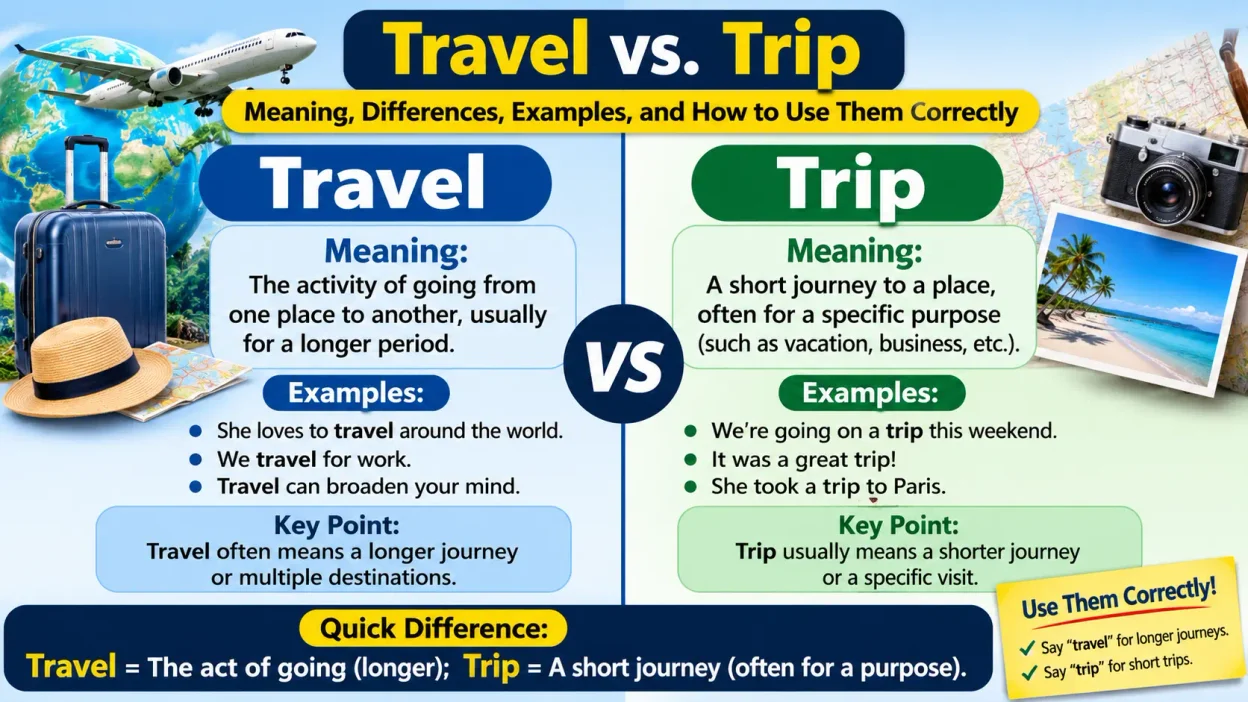
The words travel and trip are closely related because both involve going from one place to another. However, they are not interchangeable in every sentence. The main difference is that travel generally describes the activity or process of going from place to place, while trip refers to a particular journey or visit.
For example:
- I love to travel.
- We planned a trip to London.
In the first sentence, travel describes a general activity. In the second, trip refers to a specific journey.
Understanding the difference between travel and trip will help you speak more naturally, write accurately, and avoid common English grammar mistakes.
What Is the Difference Between Travel and Trip?
The main difference between travel and trip is how each word describes a journey.
- Travel: The activity or process of going from one place to another, often over a period of time or as a general experience.
- Trip: A specific journey to a place, usually with a particular purpose and an expected return.
| Word | Meaning | Common use |
|---|---|---|
| Travel | The activity or process of going from place to place | General journeys and experiences |
| Trip | A particular journey or visit | A specific occasion or destination |
Examples:
- I enjoy traveling around the world.
- We went on a trip to Italy.
- Travel can be expensive.
- Our business trip lasted three days.
- She wants to travel more often.
- She is planning a trip next month.
The easiest way to remember the difference is that travel usually describes the general activity, while trip describes one particular journey.
What Does Travel Mean?
Travel can be used as both a verb and a noun. As a verb, it means to go from one place to another. As a noun, it describes the activity or experience of traveling.
It can refer to local journeys, international journeys, business journeys, or long-term exploration.
Examples of Travel as a Verb
- I want to travel around the world.
- She travels to work by train.
- They traveled across Europe last summer.
- My brother loves to travel alone.
- We are traveling to Pakistan next week.
- He traveled thousands of miles to visit his family.
- Many people travel during the holidays.
Examples of Travel as a Noun
- Travel helps people discover new cultures.
- Air travel has become more convenient.
- International travel requires careful planning.
- She enjoys travel and photography.
- Business travel can be tiring.
Common Grammar Patterns with Travel
1. Travel + to + place
Use this structure when identifying a destination.
- I travel to London every year.
- She traveled to Japan last summer.
- We are traveling to Karachi tomorrow.
2. Travel + by + means of transport
Use this pattern to describe how someone travels.
- We travel by train.
- He traveled by airplane.
- They prefer traveling by car.
3. Travel + around + place
Use this structure when describing movement through different locations.
- She wants to travel around the world.
- We traveled around Europe.
- They love traveling around the country.
4. Travel + alone / together / abroad
These words can provide more information about the journey.
- I prefer to travel alone.
- We traveled together last year.
- She wants to travel abroad.
What Does Trip Mean?
Trip is a noun that refers to a particular journey or visit to a place. It usually has a specific purpose, destination, or time period.
A trip may be for vacation, business, education, shopping, family visits, or other reasons.
Examples of Trip in Sentences
- We went on a trip to Dubai.
- Our school organized a trip to the museum.
- She is planning a business trip next week.
- The trip was more enjoyable than I expected.
- They returned home after a three-day trip.
- I had a wonderful trip with my family.
- His trip to Japan was unforgettable.
Common Grammar Patterns with Trip
1. Go on a trip
This is one of the most common expressions.
- We are going on a trip tomorrow.
- She went on a trip with her friends.
- They want to go on a trip during the summer.
2. Take a trip
Use this expression when someone plans or makes a journey.
- We took a trip to the mountains.
- I want to take a trip abroad.
- He took a short trip to visit his parents.
3. A trip to + place
Use this structure to identify the destination.
- A trip to London.
- A trip to the beach.
- A trip to the countryside.
4. A trip for + purpose
Use this structure to explain why someone is traveling.
- A trip for business.
- A trip for education.
- A trip for medical treatment.
5. On a trip
Use this expression to describe someone’s current travel situation.
- My parents are on a trip.
- She is on a business trip.
- We met some interesting people on our trip.
Travel vs. Trip: Key Differences
Although both words are associated with journeys, they have different grammatical roles and meanings.
| Feature | Travel | Trip |
|---|---|---|
| Part of speech | Verb and noun | Noun |
| Meaning | The activity of going from place to place | A particular journey |
| Focus | General activity or experience | Specific journey or visit |
| Duration | Can describe short or long periods of traveling | Usually refers to a defined journey |
| Common expressions | Travel abroad, travel by train | Go on a trip, take a trip |
| Example | I love to travel. | I took a trip to Paris. |
Compare these examples:
- Travel is one of my favorite activities.
- Our trip to Paris was amazing.
- She travels frequently for work.
- She is going on a business trip tomorrow.
- I want to travel around Asia.
- I am planning a trip to Thailand.
The difference is that travel describes the broader activity, while trip identifies a particular journey.
Travel vs. Trip: Side-by-Side Examples
The following examples show how both words can be used when discussing similar situations.
| Travel | Trip |
|---|---|
| I love to travel abroad. | I went on a trip abroad. |
| She travels for business. | She took a business trip. |
| We enjoy traveling together. | We went on a trip together. |
| Travel can teach us about other cultures. | Our trip taught us about local traditions. |
| He travels by train every week. | He took a train trip last weekend. |
| They want to travel more often. | They are planning another trip. |
Travel vs. Trip: What Is the Difference in Everyday English?
In everyday conversations, travel is often used when discussing someone’s general interest, lifestyle, or experience of visiting different places.
For example:
- Do you like to travel?
- I want to travel more next year.
- She has traveled to many countries.
On the other hand, trip is more common when talking about a particular journey.
For example:
- How was your trip?
- Where are you going on your next trip?
- We had a great trip last weekend.
Travel can also be used as an uncountable noun when discussing the general activity.
- Travel is expensive.
- Travel is a great way to explore the world.
However, when referring to a particular journey, trip is usually the more natural choice.
Travel vs. Trip vs. Journey: What Is the Difference?
The words travel, trip, and journey all relate to movement from one place to another, but they emphasize different aspects of the experience.
- Travel: The general activity or process of going from place to place.
- Trip: A particular journey, visit, or excursion.
- Journey: The act or process of traveling from one location to another, often emphasizing the route, distance, or experience.
| Word | Main meaning | Example |
|---|---|---|
| Travel | General activity of going places | I love travel. |
| Trip | A specific visit or excursion | We took a trip to Rome. |
| Journey | The process of traveling between places | The journey took six hours. |
Examples:
- I enjoy traveling around the world.
- Our trip to Rome was wonderful.
- The journey from Rome to Florence took several hours.
Although these words sometimes overlap, they are not always interchangeable.
Travel vs. Trip vs. Vacation
Another common source of confusion is the difference between travel, trip, and vacation.
Travel describes the activity of going from place to place.
Trip refers to a specific journey or visit.
Vacation refers to a period of time away from work or regular responsibilities, usually for relaxation or enjoyment.
Examples:
- I love to travel.
- We planned a trip to the mountains.
- I am taking a vacation next month.
A trip does not have to be a vacation. For example, a business trip is usually connected with work rather than relaxation.
Similarly, traveling does not always mean taking a vacation. People travel for work, education, family responsibilities, and many other reasons.
Can Travel and Trip Be Used Interchangeably?
No. Although both words relate to journeys, their grammatical functions are different.
For example:
Correct:
- I love to travel.
- I am planning a trip to Canada.
- She travels frequently.
- We went on a trip last weekend.
Incorrect or unnatural:
- I love to trip. (If you mean that you enjoy traveling.)
- We are planning a travel to Canada.
- She went on a travel last weekend.
The word travel is generally uncountable when used as a noun, so we normally do not say a travel to mean one particular journey. Use a trip instead.
However, travel can be used as a countable noun in specialized contexts, such as a travel meaning a particular movement or passage in technical or literary language. This is not the usual everyday meaning.
Common Mistakes When Using Travel and Trip
English learners sometimes confuse these words because they share a similar meaning. Here are common mistakes and their corrections.
| Incorrect sentence | Correct sentence | Explanation |
|---|---|---|
| I went on a travel to London. | I went on a trip to London. | Use trip for a specific journey. |
| I love to trip around the world. | I love to travel around the world. | Use travel for the general activity. |
| We made a travel last week. | We took a trip last week. | Take a trip is the natural expression. |
| She is planning a travel abroad. | She is planning a trip abroad. | Use a trip for one journey. |
| My trip is very expensive in general. | Travel is very expensive in general. | Use travel for the general activity. |
| He traveled on a business last month. | He went on a business trip last month. | Business trip is the correct expression. |
Easy Tips to Remember the Difference
If you often confuse travel and trip, these simple tips can help.
1. Think about a general activity.
Use travel when talking about traveling as an activity or experience.
- I love to travel.
- Travel can be exciting.
2. Think about one specific journey.
Use trip when talking about a particular visit or journey.
- We went on a trip.
- My trip was wonderful.
3. Remember the common expressions.
- Travel around the world.
- Travel by train.
- Go on a trip.
- Take a trip.
- Business trip.
4. Remember that trip is countable.
You can say:
- A trip.
- Two trips.
- Several trips.
But in ordinary English, travel is generally uncountable when used as a noun.
5. Practice with everyday situations.
- I enjoy traveling.
- I am planning a trip.
- She travels for work.
- She went on a business trip.
These patterns will help you choose the correct word naturally.
Travel vs. Trip: Practice Quiz
Test your understanding by choosing the correct word in each sentence.
1. I love to _____ around the world.
- A. travel
- B. trip
2. We went on a _____ to London last summer.
- A. travel
- B. trip
3. She frequently _____ for work.
- A. travels
- B. trips
4. They are planning a family _____ next month.
- A. travel
- B. trip
5. _____ can help people discover new cultures.
- A. Travel
- B. A trip
6. My father is going on a business _____.
- A. travel
- B. trip
Answers:
- A — travel
- B — trip
- A — travels
- B — trip
- A — Travel
- B — trip
Conclusion
The difference between travel and trip is mainly about how you describe a journey. Travel refers to the general activity or process of going from one place to another, while trip refers to a particular journey or visit.
You travel around the world, but you take a trip to a specific destination. You can also enjoy travel as a general experience while planning several trips throughout the year.
Remembering these simple differences and common grammar patterns will help you use both words correctly in everyday conversations and written English.
Frequently Asked Questions (FAQs)
1. What is the main difference between travel and trip?
Travel describes the general activity of going from place to place, while trip refers to a specific journey or visit. For example, “I love to travel” and “I went on a trip to Paris.”
2. Is travel a noun or a verb?
Travel can be both a noun and a verb.
As a verb: “I travel to work every day.”
As a noun: “Travel is an exciting experience.”
3. Is trip a noun or a verb?
Trip is commonly used as a noun meaning a journey or visit. It can also be a verb, but as a verb it usually means to stumble or accidentally catch your foot on something.
For example:
- We planned a trip to Dubai.
- Be careful not to trip over the cable.
4. Can I say “a travel”?
In ordinary English, travel is generally an uncountable noun, so “a travel” is not normally used to describe one journey. Say “a trip” or “a journey” instead.
5. What is the difference between travel and traveling?
Travel is the base form of the verb and can also be a noun. Traveling is its -ing form, used in continuous verb tenses, as a gerund, or as a participle.
Examples:
- I love to travel.
- I am traveling tomorrow.
- Traveling can be educational.
6. What does going on a trip mean?
Going on a trip means taking a particular journey to another place, usually for a specific purpose such as vacation, business, education, or visiting family.
7. What is the difference between a trip and a journey?
A trip usually refers to a particular visit or excursion, while a journey emphasizes the process of traveling from one location to another, including the route or experience.
8. Is a business trip the same as business travel?
They are related but slightly different. A business trip refers to one specific journey for work, while business travel refers more generally to traveling for professional reasons.
9. Can travel and trip be used in the same sentence?
Yes. For example: “I love to travel, and my next trip will be to Japan.” Here, travel describes a general interest, while trip identifies one particular journey.
10. Which word should I use when asking someone about their holiday?
Use trip when asking about a specific journey.
For example: “How was your trip?”
You can also ask, “Did you enjoy your travels?” when referring more generally to someone’s travel experiences.


[…] journey can be short or long, although the word is frequently associated with travel that involves a meaningful distance or experience. It can also describe personal development or progress toward a […]